
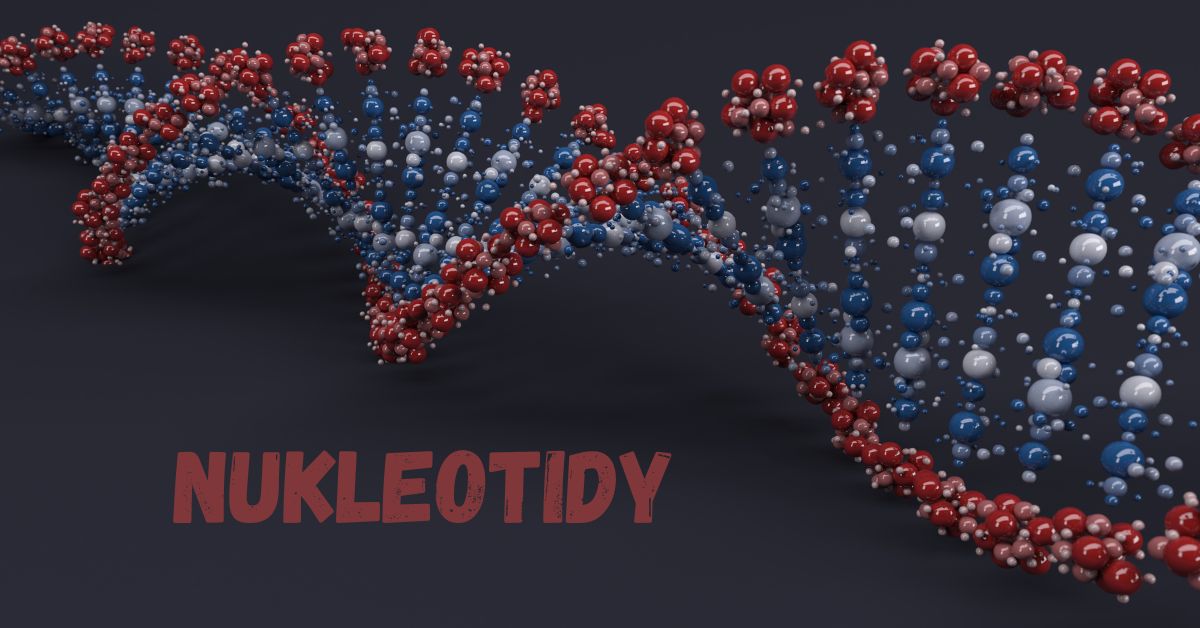
The term nukleotidy—used in several Slavic languages—corresponds to the English word nucleotides, the molecular building blocks of nucleic acids. Nucleotides serve as the essential components of DNA (deoxyribonucleic acid) and RNA (ribonucleic acid), the two polymers responsible for genetic information storage, transmission, and expression in all living organisms. Beyond their role in genetics, nucleotides function as universal carriers of chemical energy, intracellular signaling molecules, and fundamental components of coenzymes crucial for metabolic pathways.
Understanding nucleotides is foundational to molecular biology, biochemistry, genetics, and modern biotechnology. This article provides a comprehensive and professional overview of their structure, classification, biochemical properties, and central roles in cellular systems, along with frequently asked questions to reinforce key concepts.
Chemical Structure of Nucleotides
Although nucleotides exist in many variations, all share a common three-part structure:
- Nitrogenous base
- Pentose sugar
- Phosphate group(s)
This modular architecture enables nucleotides to participate in diverse biochemical functions.
Nitrogenous Bases
Nitrogenous bases are heterocyclic molecules that contain nitrogen atoms capable of hydrogen bonding—an essential feature in forming the structure and stability of DNA and RNA.
They are categorized into purines and pyrimidines:
Purines (double-ring structure):
- Adenine (A)
- Guanine (G)
Pyrimidines (single-ring structure):
- Cytosine (C)
- Thymine (T) — exclusive to DNA
- Uracil (U) — exclusive to RNA
These bases pair in highly specific ways during nucleic acid formation:
- A pairs with T in DNA
- A pairs with U in RNA
- C pairs with G in both DNA and RNA
This complementary pairing ensures accurate genetic replication and transcription.
Pentose Sugar
The sugar component determines whether a nucleotide belongs to DNA or RNA:
- Deoxyribose → forms deoxyribonucleotides (DNA nucleotides)
- Ribose → forms ribonucleotides (RNA nucleotides)
The presence or absence of a hydroxyl (–OH) group on the 2′ carbon contributes to the differing chemical stability of DNA and RNA. DNA, lacking this hydroxyl group, is more chemically stable and suitable for long-term genetic storage.
Phosphate Group(s)
Nucleotides contain one, two, or three phosphate groups linked to the 5′ carbon of the sugar.
Common forms include:
- AMP — adenosine monophosphate
- ADP — adenosine diphosphate
- ATP — adenosine triphosphate
The bonds between phosphate groups store large amounts of chemical energy. ATP, in particular, plays a central role in cellular energy transfer, acting as the universal “energy currency” of the cell.
Formation of Nucleic Acid Polymers
Nucleotides do not act merely as isolated molecules; they link together to form long, structured polymers that store and transmit genetic information.
Phosphodiester Bond Formation
Nucleotides join via phosphodiester bonds, connecting the phosphate group of one nucleotide to the sugar of another. This linkage creates a sugar-phosphate backbone with a consistent orientation:
- 5′ end — ends with a phosphate group
- 3′ end — ends with a hydroxyl (–OH) group
This inherent directionality is crucial during:
- DNA replication
- RNA transcription
- Protein synthesis
Enzymes involved in these processes can recognize nucleotide chains precisely because of this orientation.
DNA Double Helix and RNA Structure
In DNA, two polynucleotide strands align in an antiparallel fashion, forming the iconic double-helix structure. Base pairing (A–T and C–G) stabilizes the helix and ensures faithful replication.
RNA, on the other hand, is typically single-stranded, though it can fold into complex three-dimensional structures. These structures allow RNA to perform diverse functions, including catalysis (as ribozymes), regulation, and protein synthesis.
Classification of Nucleotides
Nucleotides can be broadly divided into DNA nucleotides and RNA nucleotides.
DNA Nucleotides (Deoxyribonucleotides)
DNA nucleotides include:
- dATP
- dGTP
- dCTP
- dTTP
These molecules are essential for chromosomal DNA replication and the long-term storage of genetic information.
RNA Nucleotides (Ribonucleotides)
RNA nucleotides include:
- ATP
- GTP
- CTP
- UTP
These molecules are vital for transcription and numerous metabolic reactions.
Biological Functions of Nucleotides
Nucleotides are indispensable for nearly every major cellular process. Their roles extend far beyond simply forming genetic material.
Storage, Transfer, and Expression of Genetic Information
DNA, composed entirely of deoxyribonucleotides, stores hereditary information. RNA nucleotides enable transcription, gene regulation, and translation—the conversion of genetic code into proteins.
Without nucleotides, the genetic continuity of life would cease.
Cellular Energy Transfer
Nucleotides such as ATP and GTP are critical for powering biological processes, including:
- muscle contraction
- active transport across membranes
- synthesis of macromolecules
- metabolic regulation
The hydrolysis of ATP releases substantial energy that drives countless biochemical reactions.
Intracellular Signaling
Certain nucleotide derivatives act as second messengers, transmitting signals inside cells:
- cAMP — regulates hormonal responses, metabolism, and gene expression
- cGMP — modulates vision, vasodilation, and cellular communication
These signaling molecules amplify external signals and coordinate complex physiological responses.
Components of Coenzymes
Several key coenzymes essential for metabolism contain nucleotides:
- NAD⁺ / NADH
- FAD / FADH₂
- Coenzyme A (CoA)
These coenzymes participate in energy production through oxidative phosphorylation and the citric acid cycle.
Importance in Medicine and Biotechnology
Modern scientific advancements heavily rely on nucleotides.
Genetic Engineering and Research
Nucleotides are indispensable for:
- PCR (Polymerase Chain Reaction)
- DNA sequencing
- CRISPR gene editing
- mRNA vaccines
These technologies depend on the accuracy and stability of nucleotides.
Pharmaceutical Applications
Many antiviral and anticancer drugs function by mimicking nucleotides and interfering with nucleic acid synthesis. For example:
- Antiviral drugs for HIV and hepatitis disrupt viral replication
- Chemotherapy agents target nucleotide synthesis pathways to inhibit cancer cell growth
Conclusion
Nukleotidy (nucleotides) are among the most essential biomolecules in all living organisms. Their versatile structure allows them to form the genetic code, store and transmit cellular energy, participate in signaling, and support metabolic processes. Advances in molecular biology, medicine, and biotechnology continue to rely on the unique properties of nucleotides to drive innovation. As science progresses, the importance of understanding nucleotides becomes increasingly vital, shaping our knowledge of life at the molecular level and enabling transformative breakthroughs across biological and medical research.
Frequently Asked Questions (FAQs)
1. What are nucleotides in simple terms?
Nucleotides are small molecules that build DNA and RNA. They also help store energy (ATP) and send signals inside cells.
2. Why are nucleotides important for life?
They store genetic information, power cellular activities, assist in metabolism, and regulate essential biological functions.
3. How are nucleotides different from nucleosides?
A nucleoside contains only:
- a nitrogenous base
- a sugar
A nucleotide also includes one or more phosphate groups.
4. What is the function of ATP?
ATP acts as the cell’s main energy source, fueling biochemical reactions that sustain life.
5. Do nucleotides only exist in DNA and RNA?
No. While they form DNA and RNA, many nucleotides serve other crucial roles in metabolism, signaling, and enzymatic reactions.
6. Are nucleotides used in medicine?
Yes. Modified nucleotides are used in antiviral treatments, cancer therapies, and vaccine technologies.
7. How do nucleotides form DNA?
They bond through phosphodiester linkages, creating long chains that pair through complementary bases to form a double helix.
8. What happens if nucleotide synthesis is disrupted?
Cells cannot replicate DNA, produce RNA, or generate energy efficiently, leading to cellular malfunction or death.