
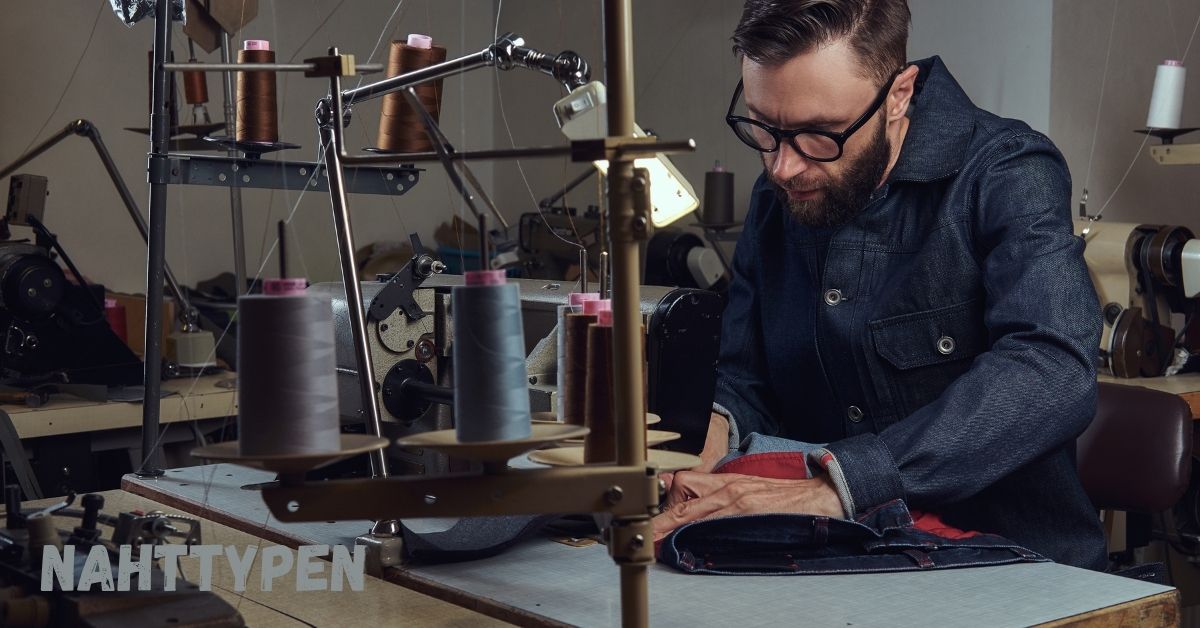
Introduction to Nahttypen
The term nahttypen originates from the German language and directly translates to “types of seams.” It is widely used across several professional domains, most notably in textiles and garment manufacturing, but also in industrial fabrication and medical practices. Understanding it is essential for professionals who work with materials that must be joined securely, aesthetically, or functionally.
Seams are more than simple joining lines; they influence durability, comfort, appearance, and performance. The selection of a specific seam type is often dictated by material properties, functional requirements, and manufacturing processes. As such, it represent a foundational concept in both traditional craftsmanship and modern industrial production.
Nahttypen in Textile and Garment Manufacturing
In the textile industry, it refer to standardized methods used to join fabric components into finished products. These seam types are defined by how fabric layers are positioned, stitched, and finished. Their selection affects garment strength, flexibility, and wearability, making them critical in apparel design and production.
Different fabrics respond uniquely to stress, movement, and washing. For this reason, lightweight materials such as silk require different nahttypen than heavy denim or technical fabrics. Manufacturers must consider fraying tendencies, elasticity, and thickness when choosing the appropriate seam structure.
The correct application of nahttypen also contributes to production efficiency. Well-chosen seams reduce material waste, improve assembly speed, and minimize post-production defects. In high-volume manufacturing, consistency in seam selection ensures predictable product quality and durability.
Structural Classification of Nahttypen
It can be classified according to their structural construction. A plain seam, for example, is formed by placing two fabric pieces together and stitching along the edge. It is one of the most commonly used seam types due to its simplicity and versatility.
More complex seam structures include enclosed seams, where raw edges are hidden within the seam itself. These nahttypen are frequently used in high-quality garments or delicate fabrics to prevent fraying and improve comfort. Their construction requires additional steps but results in a cleaner and more refined interior finish.
Another structural category includes overlapping seams, where one material layer is placed over another rather than edge-to-edge. This type is particularly effective for thick or non-fraying materials and is often found in outerwear, leather goods, and upholstery.
Functional Purposes of Different Nahttypen
Each seam type serves a specific functional purpose. Some nahttypen are designed to maximize strength and load-bearing capacity, while others prioritize flexibility or aesthetic appeal. In workwear and protective clothing, seam durability is often the primary concern.
Elastic and stretch seams are commonly used in sportswear and activewear. These nahttypen allow garments to move with the body without compromising structural integrity. Their design accommodates repeated stretching and recovery, which is essential for comfort and longevity.
Decorative seams, while still functional, are chosen for their visual impact. In these cases, it become a design element, contributing to garment style and character. Such seams may involve visible stitching, contrasting threads, or raised seam profiles.
Nahttypen in Industrial and Technical Applications
Beyond textiles, nahttypen are widely used in industrial fabrication, particularly in welding and mechanical assembly. In this context, the term refers to the geometric and functional classification of weld seams used to join metal components.
Different industrial it selected based on load requirements, material thickness, and stress distribution. A seam designed for static loads may differ significantly from one intended for dynamic or vibration-heavy environments. Proper seam selection is essential for safety and structural reliability.
Quality standards and regulations often govern the use of industrial seam types. Engineers must document and inspect it to ensure compliance with safety norms. In this setting, seams are not merely joining elements but critical contributors to overall system performance.
Nahttypen in Medical and Surgical Contexts
In medical practice, it describe different suturing techniques used to close wounds or surgical incisions. These seam types are chosen based on tissue type, wound size, and healing requirements. Precision and consistency are vital in this field.
Some surgical nahttypen are designed for rapid closure, while others focus on minimizing scarring or reducing tension on healing tissue. The choice of seam type can significantly influence recovery time and patient comfort.
Medical seam techniques also vary in permanence. Some sutures dissolve naturally over time, while others require removal. Understanding the functional differences between these it is an essential part of surgical training and patient care.
Material Influence on Nahttypen Selection
Material characteristics play a decisive role in determining suitable nahttypen. Factors such as thickness, elasticity, surface texture, and resistance to fraying must all be considered before selecting a seam type.
Natural fibers often behave differently from synthetic materials when stitched. For example, woven fabrics typically require seam finishes that prevent unraveling, while knitted fabrics demand seams that preserve stretch properties. Incorrect seam selection can lead to premature failure or discomfort.
Advances in material science have introduced new fabrics that challenge traditional seam construction. Technical textiles, composite materials, and smart fabrics require adapted or entirely new nahttypen to maintain performance standards.
Conclusion
It represent a fundamental concept across multiple professional disciplines, from garment manufacturing and industrial engineering to medical practice. While the term simply translates to “types of seams,” its practical implications are far-reaching and highly specialized.
Understanding nahttypen enables professionals to make informed decisions that affect durability, safety, comfort, and aesthetics. Whether joining fabric, metal, or tissue, the appropriate seam type ensures functional integrity and long-term performance.
As materials and technologies continue to evolve, so too will the classification and application of nahttypen. A solid foundational understanding remains essential for adapting to these advancements and maintaining high professional standards.
Short FAQs
1. What does nahttypen mean?
It is a German term that means “types of seams.”
2. Where is the term nahttypen commonly used?
It is commonly used in textiles, garment manufacturing, industrial welding, and medical suturing.
3. Why are different nahttypen necessary?
Different seams serve different purposes such as strength, flexibility, comfort, or aesthetics.
4. Are nahttypen standardized?
Many seam types are standardized within industries, though variations exist based on application and material.
5. Can the same nahttypen be used across industries?
Some seam principles overlap, but most nahttypen are specialized for their specific field of use.
 Sara Lara
  Lele Smith